
Since 1995, The Australian Consortium for ‘In-Country’ Indonesian Studies (Acicis) has welcomed almost 5,000 students to live, study and intern in Indonesia. It stands as one of the longest-running examples of educational public diplomacy in our region, as the forthcoming edited volume, Experiencing Indonesia: 30 years of ACICIS, (ANU Press), explores in more detail. The following article is an edited version of Elena Williams’ and Kirrilee Hughes’ chapters in that volume.
For over three decades, Acicis has provided Australian students with opportunities to study, intern and immerse themselves in Indonesia. Between 2014 and 2019, in particular, Acicis entered a phase of significant expansion. Supported by the Australian Government’s, New Colombo Plan (NCP), Acicis increased its traditional language and area studies offerings to facilitate a broader range of disciplinary programs in fields such as law, public health, business, agriculture, creative arts and tourism.
In expanding its program reach and opening Indonesia to a broader range of students, Acicis has become one of the most successful examples of ‘international education as public diplomacy’, facilitating countless interactions between Australian students and Indonesian hosts, classmates, educators, colleagues and communities. With the release of the Parliamentary Inquiry’s final report this week on deepening Australia’s Asia capability, Acicis’ story offers a timely reflection on effective relationship building that has helped to deepen Australia-Indonesia ties and broaden the way we view public diplomacy in international education.
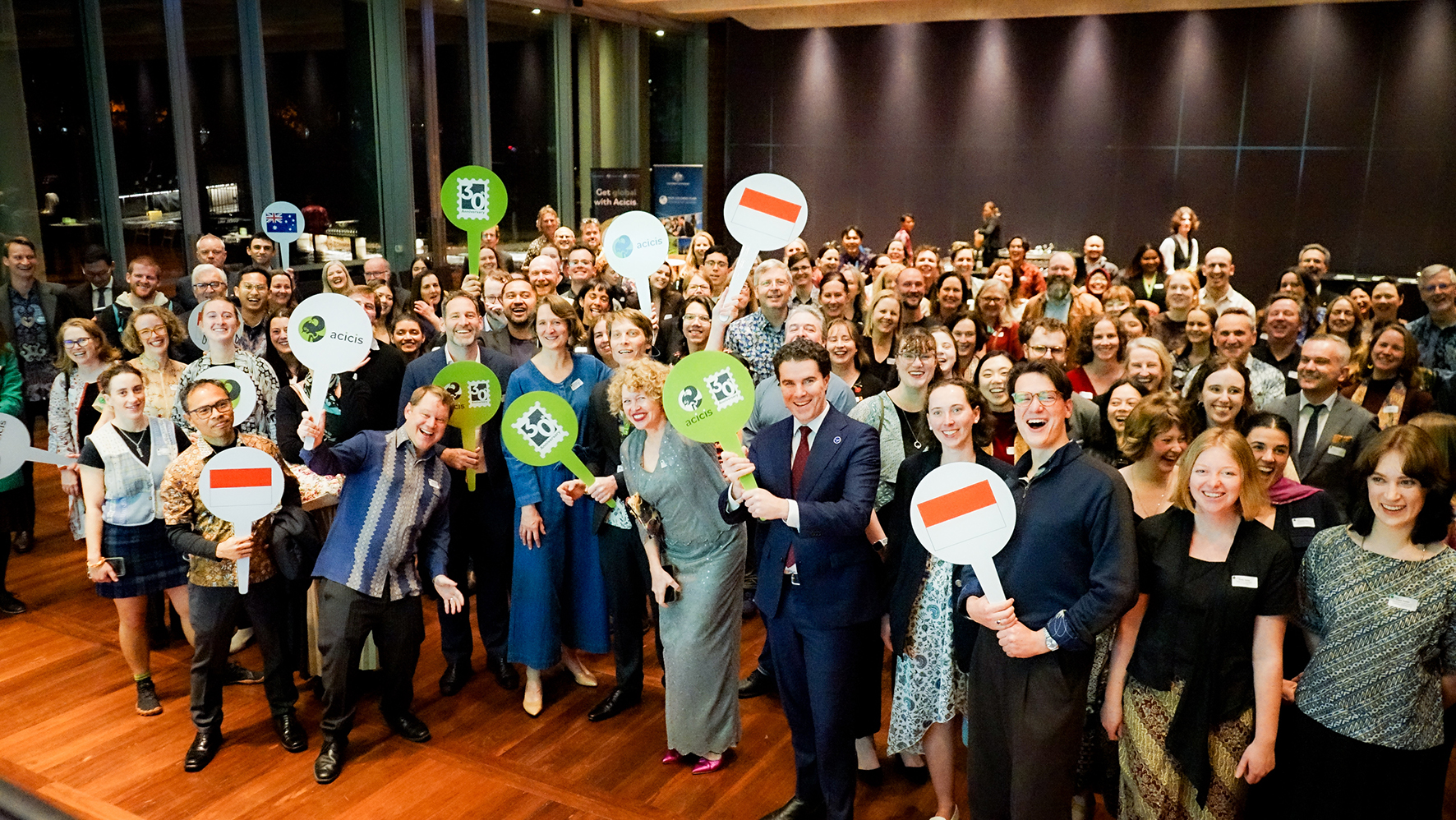
Acicis 30th anniversary celebration, Canberra, 2025
‘International Education as Public Diplomacy’ in Action
Public diplomacy is the use of cultural exchange, tourism, education or people-to-people programs to build goodwill and influence between nations. While Acicis has exercised a model of ‘international education as public diplomacy’ for many years, funding provided from the Australian Government’s NCP since 2014 has significantly bolstered Acicis’ operations. Rather than bringing international students to Australia, as the original Colombo Plan did from the 1950s onwards, the NCP sends Australian undergraduates to the Indo-Pacific region to live, study and intern, and in doing so, build relationships. It has now amassed an alumni community of more than 60,000, including over 13,000 who have travelled to Indonesia, which quickly became one of the program’s top destinations. Acicis is the primary in-country provider of these experiences, delivering a diverse range of programs from short study tours, language immersions and internships to stack-able semester-long academic programs.
What has made Acicis particularly effective as a public diplomacy vehicle is its ability to connect students from disciplines that are not overly engaged with Indonesia. At a time when Indonesian language and studies enrolments are in decline at Australian universities, Acicis has opened Indonesia to students from journalism, development studies, business, agriculture, public health, creative arts and sustainable tourism, vastly expanding the pool of ‘Indonesia-literate’ graduates with in-country experience.
This diversification has created new and significant avenues for relationship building among young Australians and Indonesians who might otherwise never have had the opportunity to meet. By diversifying discipline offerings through the NCP, Acicis has broadened participation and helped create a new generation of Australians with personal and professional connections to the country.
Transforming Students’ Understanding of Indonesia
A key reason for Acicis’ success as a public diplomacy initiative is its strong emphasis on students’ deep immersion in Indonesian communities. Students are not only encouraged to ‘immerse themselves’ in Indonesian language, culture, classrooms and society, but also in their workplaces, gaining first-hand experience of Indonesian professional culture.
For many participants, the experience transformed both their academic interests and career ambitions. A former Public Health Study Tour student reflected: “I didn’t even know you could bring Asian Studies and Medical Sciences together – suddenly the two parts of my degree made sense because I could see people working on things I wanted to work on in the future.”
Similarly, a participant in the Law Professional Practicum explained: “Here was a program where I could get credit over the summer and gain an understanding of how Indonesia’s legal system works. We’re constantly being told Indonesia is one of our most ‘strategic partners’ – I wanted to be able to go and see what that meant for myself.”
These experiences provided far more than academic credit. They gave students firsthand exposure to Indonesian institutions, workplaces and communities, allowing them to understand the country in ways that went beyond classroom instruction.
Many alumni described their time in Indonesia as career-defining. One participant stated: “It changed my life, like night and day … After [Jakarta], I completely changed my career path in terms of where I wanted to head.”
Another reflected: “I legitimately wouldn’t be on the career pathway that I’m on now had it not been for spending over a year in Indonesia.”
Comments from these students demonstrate how Acicis has supported them to create meaningful and ongoing relationships that endure well beyond their program’s duration.
Benefits for Indonesian hosts and institutions
Part of Acicis’ enduring impact can be seen in the reciprocal nature of its programming, and that the benefits have not only flowed to Australian students. Indonesian universities, workplaces and communities have also benefited from the presence of Australian students over many years.
Indonesian host institutions described how Acicis partnerships helped internationalise their campuses and classrooms meaningfully and substantively. As one Indonesian academic observed: “I felt that the classroom became more critical … Acicis students have a freedom of thinking ‘out of the box’ … so [Indonesian students] had partners to learn with in the Acicis students.”
Others noted that engagement with Australians broadened their professional aspirations and international outlooks. Former Indonesian student buddies and internship colleagues reported increased interest in postgraduate study opportunities and international careers.
One former Indonesian student buddy explained how the experience enhanced his professional standing: “I’ve become a kind of ‘go-to’ person in the office when working with Australian clients now because of my experience with Acicis students. My boss views that as something quite positive.”
These examples highlight a critical aspect of successful public diplomacy: mutual benefit. Acicis has not simply exposed Australians to Indonesia; rather, it has created opportunities for Indonesians to engage with Australians, develop international skills, and expand their own networks and ambitions to also become ‘more international’ as a result of their engagement with Acicis programs. This reciprocity has contributed to Acicis’ longevity over 30 years, highlighting an effective model of ‘international education as public diplomacy’.
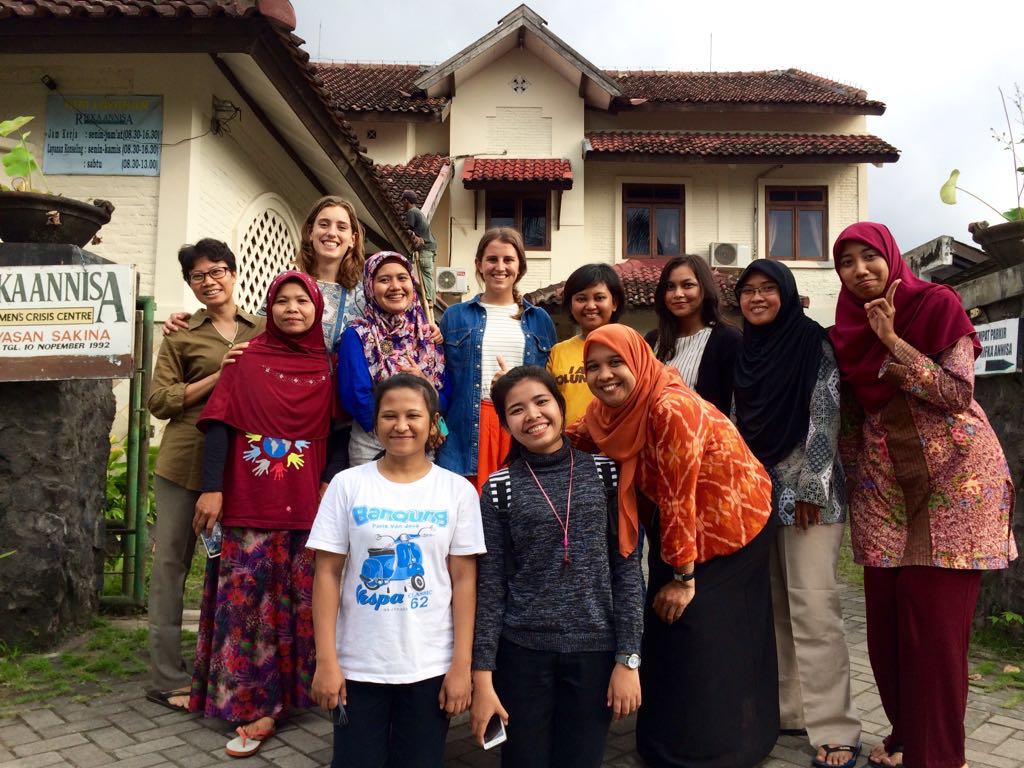
Challenging stereotypes and creating ripple effects of change
One of Acicis’ most important contributions to Australia-Indonesia relations is its capacity to challenge stereotypes and reshape perceptions.
Students and hosts consistently reported that their Acicis program and the networks it developed had enabled them to correct misconceptions held by family members, friends and colleagues, resulting in a ‘ripple effect’ that extends impact far beyond immediate program participants.
A former Development Studies student recounted how her parents’ attitudes changed after visiting her in Indonesia: “Their opinion of Indonesia as a ‘majority Islamic country’ was pretty standard [with] what you see on the news.”
After experiencing Indonesia firsthand, however, their views shifted dramatically: “Now I hear them having conversations that make me emotional sometimes to hear … communicating how exciting Indonesia is.”
She continued: “It’s so profound … being able to see that shift in someone.”
This example provides a clear illustration of how change can occur gradually, resulting in positive ripple effects. Through education, public diplomacy works most effectively when positive experiences are transmitted through personal networks, influencing perceptions among people who may never directly participate themselves. These changes can then shift from an individual student or host to the circles surrounding them, ultimately strengthening the bilateral relationship.
The Acicis Difference
Several factors explain why Acicis has been such a successful model of international education as public diplomacy.
While formal study in an Indonesian host university is an important part of Acicis programs (and – from a practical perspective – a key enabler for a student visa), Acicis has always advocated for informal learning experiences outside the classroom. For example, most Acicis programs do not offer prearranged residential accommodation. Instead, Acicis orientation programs have equipped participants with resources to secure accommodation for themselves, usually a room in a kos [boarding house-style accommodation]. Acicis programs have, from their inception, encouraged Australian participants to live with and among Indonesian students and communities, creating a role for Indonesian agency within Acicis’ brand of Indonesia literacy.
Acicis programs emphasise the important role of Indonesian students, kos mates, internship colleagues and other peers in students’ learning experiences. In this way, Australian Acicis participants do not just learn the specific subject-content of their program, they also learn about Indonesian societies and cultures, and importantly youth societies and youth cultures, which are often absent from bahasa Indonesia and Indonesian studies education programs in Australia. Acicis programs create space for and encourage the development of enduring, meaningful people-to-people connections and friendships, that extend beyond the duration of an Acicis program. Acicis can thus be seen to reconfigure agency, create context and open new spaces for Australia’s Indonesia literacy.
Importantly, Acicis has challenged notions that Indonesia literacy is to occur in Australia, in formal places of learning, without input from Indonesians, or that it should only focus on language studies. By offering in-country programs and emphasising sites of informal learning such as kos, workplaces and broader communities in Indonesia, Acicis’ modality for Indonesia literacy is both innovative and inclusive, and creates opportunities for Indonesian agency. This is also highlighted through Acicis’ consortium model and the cross-institutional partnerships it fosters among and between Australian and Indonesian universities.
Conclusion
The Acicis experience between 2014 and 2019 demonstrates the power of international education to strengthen international relationships. Supported by the NCP, Acicis expanded opportunities for Australians and Indonesians to learn from one another, work together and form lasting connections.
Its success lies not only in the thousands of students who travelled to Indonesia but also in the countless friendships, professional networks and changed perceptions that have emerged from those experiences. Through internships, classrooms, homestays and everyday interactions, participants challenged stereotypes, built trust and created a ‘ripple effect’ of positive engagement extending beyond themselves and into their families, workplaces and communities.
As the Australian Government continues to debate Australia’s Asia capability and Indonesian language enrolments in Australian education systems continue to decline, Acicis demonstrates how education can serve as one of the most effective forms of public diplomacy and achieve real change. By connecting people directly, Acicis has helped to build a stronger, more resilient Australia-Indonesia relationship: one grounded not merely in policy, but in genuine human connection.
Elena Williams and Kirrilee Hughes have both contributed to the volume, Experiencing Indonesia: 30 years of ACICIS, out in July 2026 through ANU Press. Interview data in this chapter is drawn from Elena Williams’s PhD thesis, which examined the impact of Acicis’ programs and NCP funding on Australia-Indonesia relations.