
In the Indonesian-occupied region of West Papua, large-scale deforestation to make way for agribusiness plantations under government-endorsed development schemes has radically undermined the food security of Indigenous Marind and neighboring communities, who rely primarily on native forests, savannahs, swamps, and wetlands for their daily subsistence. Forest foods including sago, root crops, cassowary, boars and deer are increasingly difficult to obtain, and villages increasingly rely on imported processed commodities including rice, instant noodles, biscuits, and fizzy drinks. Rates of wasting, stunting, and low body weight have soared since the inception of monocrop oil palm developments circa 2008, with particularly pronounced impacts among women, babies, and infants. Malnutrition-related musculoskeletal, gastrointestinal, and immune system ailments are also on the rise, including diarrhea, anemia, tuberculosis, gastroenteritis, and bronchopneumonia. These disturbing local realities are symptomatic of a growing trend of rising malnutrition across West Papua, which, together with the eastern provinces of Nusa Tenggara Timur and Maluku, represents one of Indonesia’s most food-insecure regions.
Drawing on long-term ethnographic fieldwork conducted in rural Merauke between 2011 and 2019, Land of Famished Beings: West Papuan Theories of Hunger, which received the 2026 ASAA Mid-Career Book Prize, examines how Indigenous Marind communities on the Papuan plantation frontier experience, theorize, and critique hunger and its rippling ramifications across bodies, landscapes, infrastructures, and ecologies. Its analysis revolves around four questions: How do Marind sense and make sense of hunger? How does hunger multiply depending on its relative subjects and objects? How do Indigenous theories of hunger offer new ways of thinking about the relationship between the environment, food, and nourishment in an age of self-consuming capitalist growth? And how do Indigenous critiques invite us to reimagine the ethics and politics of ethnographic writing and the responsibilities and compromises that shape anthropological commitments, in and beyond the field?
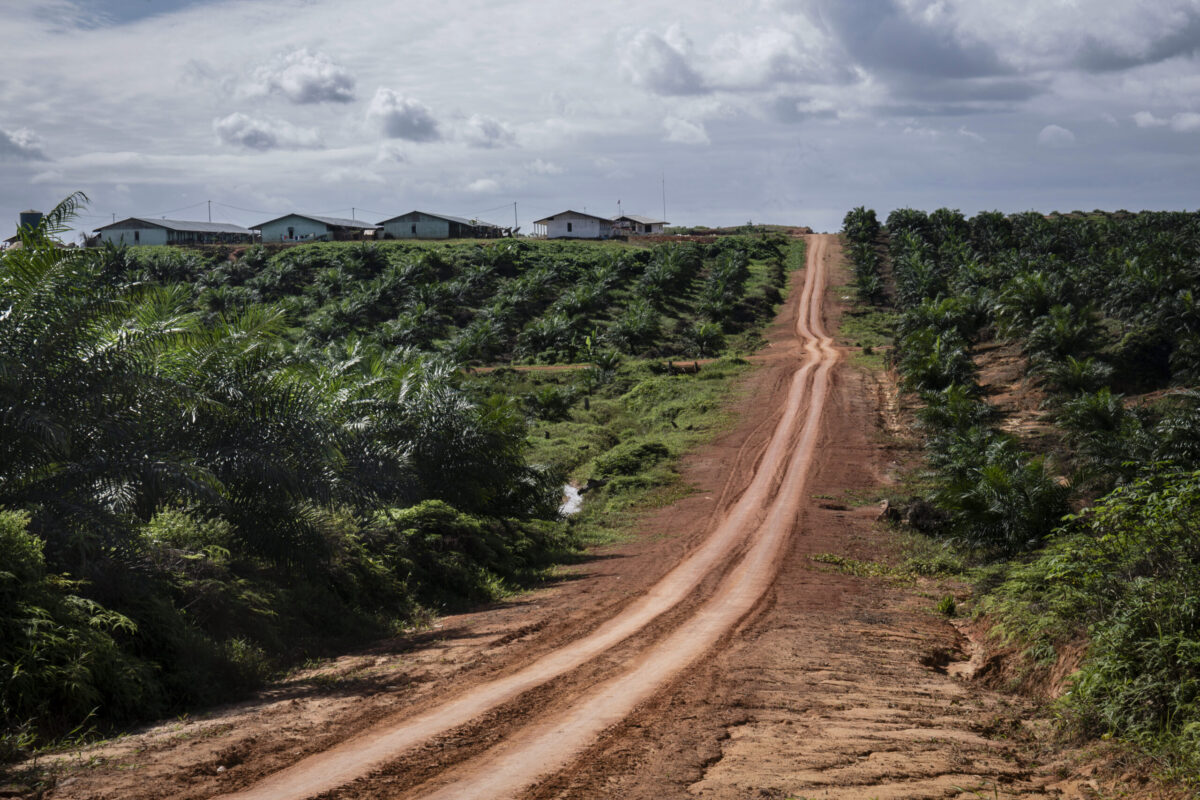
Land of Famished Beings begins by examining the meanings of satiety and hunger in the forest in light of Marind ethnonutritional frameworks and the multispecies principles and practices undergirding the procuration, preparation, consumption, and exchange of traditional forest foods. It then analyzes the transformation of Marind into subjects of new and different kinds of hunger that find root in longer histories of settler-colonial occupation and that have been exacerbated by the disappearance of food-providing forests – hunger for sago, hunger for plastic, hunger for money, and hunger for human flesh. These new hungers are compounded by the subjection of Marind themselves into objects of consumption by an array of invasive, foreign, and masculinized entities, that are said to prey upon Marind bodies, lands, and futures—from roads and cities, to the government, corporations, and the plant of oil palm itself. The book further considers how Marind explain and rationalize the causes of hunger, including its significance as a punishment meted out by ancestral spirits for Marind’s failure to protect the forest, as a manifestation of West Papua’s oppression under Indonesian rule, and as a form of sacrifice or martyrdom that is necessary to achieving the greater good of feeding the nation and feeding the world. The final chapter of the work delves into the ethical conundrums that arose in the course of my ethnographic research on hunger among Marind and invites a practice of hesitant anthropology that acknowledges the force of uncertainty, doubt, and silence in shaping the worlds we study.
The central protagonists and theorists of Land of Famished Beings are the women of rural Merauke, whose particular interest in the question of hunger is intrinsically linked to their sense of identity and pride as food providers and mothers. At the same time, Marind women’s concerns with hunger also stem from other, more covert sentiments. On the one hand, speaking about hunger offers an avenue for women to condemn the attritive effects of histories of colonial racial capitalism on Indigenous Papuan lands and bodies. On the other hand, speaking about hunger also enables women to voice their frustrations, resentment, and anger toward Marind men within their communities, whose monopoly over decisions to surrender land to, or otherwise cooperate with, agribusiness corporations many women see as exacerbating food insecurity on the ground. Here, women’s narratives serve a cathartic function in communicating gendered power asymmetries that have been amplified in the context of intensifying land conversions and that are revelatory of a nascent or implicit Indigenous feminist consciousness around hunger—one that in turn acts as an internal critique and as the potential grounds for activism against the masculinism of both the colonial nation-state and the patriarchy of customary systems.
In taking seriously the diverse meanings of hunger as lived experience, moral metaphor, and social critique, Land of Famished Beings seeks to overcome the reduction of foods to nutrients and calories as supposedly neutral and universal determinants of human health. In doing so, the work sheds vital light on the political, sensual, cultural, moral, and affective dimensions of food and hunger that are routinely elided in scientific, policy, and poverty discourses, together with the more-than-human sociality of consumption as a mutualistic relation of eating and being eaten. It foregrounds what is lost or obscured through the metrification, medicalization, individualization, and rationalization of hunger as a purely technical concern, best quantified, addressed, and solved by scientists and policymakers as experts. It helps counter the prevalence of deficit-centered approaches to Indigenous diets within nutritional scholarship and its lack of attention to the ravaging effects of (settler) colonization on Indigenous food-based identities, ecologies, and socialities. It further points to frictions and hesitations among the hungry themselves over what a good diet entails; what subsistence is (un)desirable; how nutrition relates to nourishment, appetite, and satiety; and what foods can best sustain human, intergenerational, and ecological well-being across local and global scales.
Importantly, the ramifications of these questions extend well beyond the West Papuan plantation frontier. They bring readers to consider what powers and forces dictate what goes into which bodies, what counts as food, when food means life, and who or what becomes eater and eaten. They open space for thinking differently about how hungers are experienced, understood, and explained; whom they position as privileged or vulnerable across interconnected local and global settings; and what they expose about the power systems determining who must go hungry in order for others to be fed. In a world where every meal is connected but not every meal is shared, Marind theories of hunger thus implicate all of us who are in one way or another invested in impure, metabolic relations as situated earthly dwellers and as everyday global consumers.